Ask a Question
Experts in Silicone Gasket Solutions

Capabilities

Manufacturing

Making unique constructions with distinct materials and processes

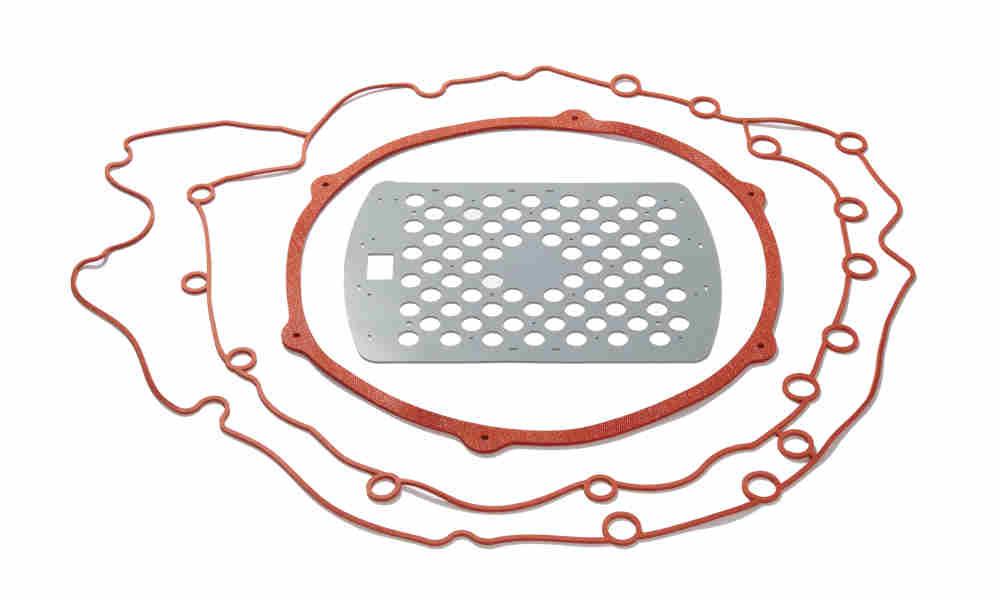
Oversized red compression molded solid, and red waterjet cut sponge parts with gray foam

Solid waterjet cut and molded gaskets

Stockwell Elastomerics is a leading American custom gasket manufacturing company and gasket supplier with on-site gasket manufacturing facilities in the USA. Specializing in made-to-specification custom gasket manufacturing, Stockwell Elastomerics has a broad range of material and processing capabilities. Stockwell Elastomerics has a core competence in high performance, engineered rubber/elastomeric materials and has in-house die-cutting, waterjet cutting and molding allowing for quick-turn gasket manufacturing, making it one of the top gasket suppliers in the country. Other value-added custom gasket manufacturing services include material lamination, adhesive lamination and custom gasket assembly.

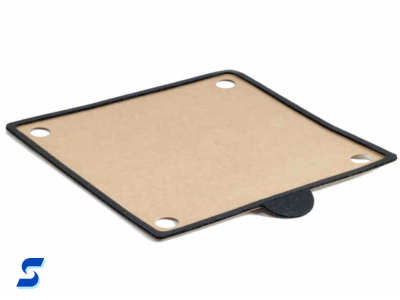
Black poron die cut gasket kiss cut on brown liner

Die Cut Gaskets

Stockwell Elastomerics offers custom die cut gaskets, using steel rule die cutting on silicone rubber and other elastomers, for fast, efficient and economical gasket production.
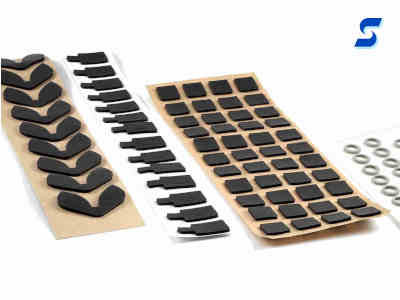
Kiss cut progression strips on liner Kiss Cut Gaskets

Kiss cut gaskets are supplied on a roll where the gasket can easily be removed from the paper backing. Kiss cutting is a process where the gasket material is cut but the adhesive backing (paper liner) remains intact. The surrounding material is removed leaving just the kiss cut gaskets on the paper liner.
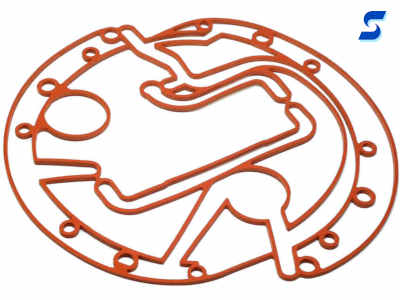
Red waterjet cut solid silicone patterned part

Waterjet Cut Gaskets

Done with waterjet cutting, a tool-less, green custom gasket manufacturing process, waterjet cut gaskets are quick and accurate. Four in-house waterjet cutting units allow Stockwell Elastomerics to manufacture short lead time gaskets and quick-turn prototypes to meet demanding engineering timelines.
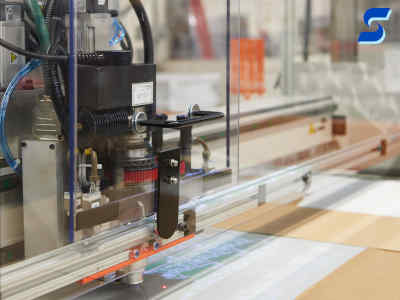
Flash cutter working on cutting parts, wide angle shot

Flash Cut Gaskets

Stockwell Elastomerics fabricates flash cut gaskets and pads using die-less, automated, digital knife cutting systems that can cut most silicone elastomer materials at high speeds. This is especially useful for quick turn prototyping and rapid production.
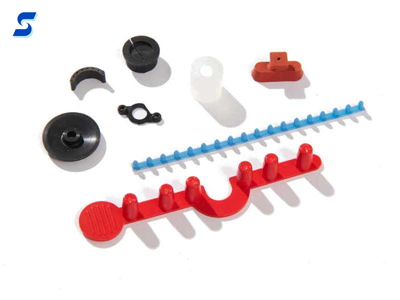
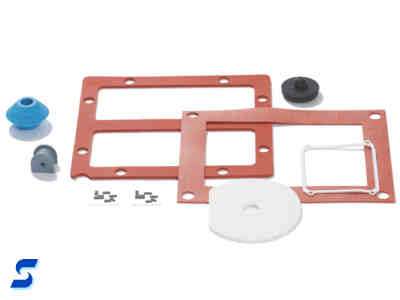
Small red and blue LSR molded parts with risen pegs and other micro gaskets with bumpouts for fit

Molded Gaskets

Stockwell Elastomerics liquid injection molds silicone rubber from 10 to 70 durometer and compression molds specialty parts such as EMI gaskets. Silicone injection molding is a custom gasket manufacturing process that offers relatively low cost molds as compared to plastics. Short cycle times and in-house cryogenic deflashing make molded parts feasible in modest volumes.
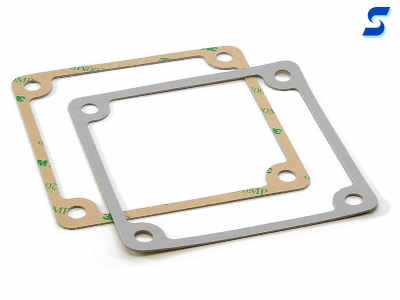
Peel and stick window gasket shown material up and adhesive up

Adhesive Backed Gaskets

A value-add custom gasket manufacturing serivce offered by Stockwell Elastomerics is adhesive lamination to create adhesive backed gaskets. With more than 30 acrylic, silicone and rubber pressure sensitive adhesives in stock, customers can select the best adhesive and bonding substrate for their application.
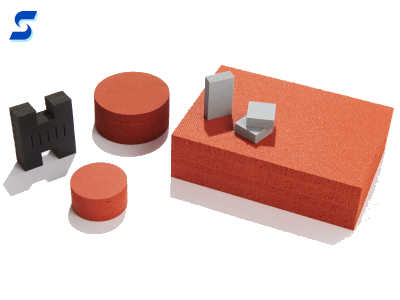
Developed thickness sponge and foam laminations in gray and red

Silicone Foam Lamination & Silicone Sponge Lamination

Stockwell Elastomerics is a leading provider of silicone foam and silicone sponge lamination servicesas part of its custom gasket manufacturing offerings.
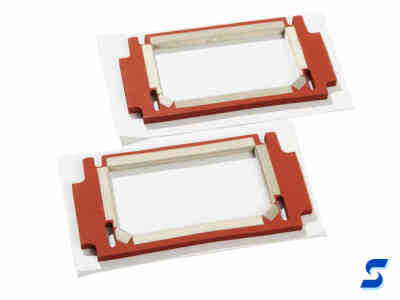
Custom assembled red sponge window gasket with flectron wrap on inner edge

Custom Gasket Assembly

Stockwell Elastomerics is a leading provider of custom gasket fabrication and gasket assembly servicesLarge gaskets, pads or odd geometries are Stockwell Elastomerics’ custom gasket manufacturing specialties. Stockwell Elastomerics Applications Engineers will work with customers’ engineers to help design a manufacturable solution to make custom gaskets, custom pads and unique designs.
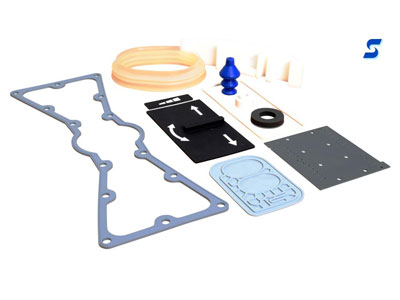
Molded and fabricated silicone rubber

Liquid Silicone Injection Molding

Stockwell Elastomerics is a leading provider of liquid silicone injection molding services, the fastest growing segment of Stockwell Elastomerics’s custom gasket manufacturing operations.
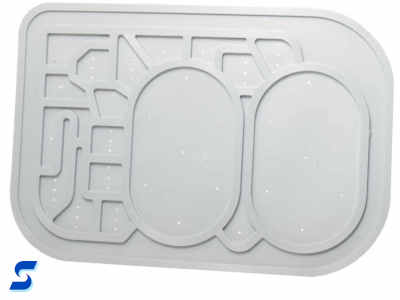
Gray, compression molded parts with dual depths

Silicone Rubber Compression Molding

Stockwell Elastomerics provides silicone rubber compression molding services, producing compression molded custom rubber components on-site in Philadelphia to service fast-turn requirements and specialty applications for customers in technology-driven markets.
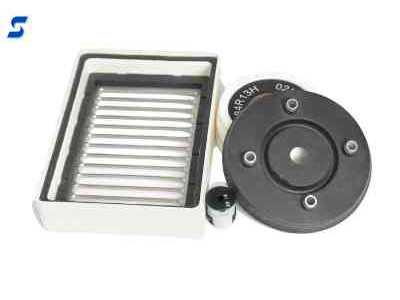
Insert molded parts with steel compression stops and vents and plastic placed in Insert Molding

During insert molding, a component that was previously manufactured is preloaded into a mold, and a silicone compound is then molded over and around the part. Stockwell Elastomerics can also provide overmolding and co-molding.
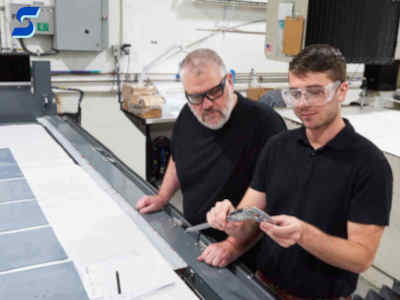
Engineer and operator measuring the size of a part

Gasket Design Assistance and Rapid Prototyping

Stockwell Elastomerics assists designers and engineers in the technology sector by providing material recommendations and samples for the gasket design and development process, along with rapid prototyping for faster product development.

Custom Gasket Selection: Frequently Asked Questions

Stockwell Elastomerics specializes in custom gasket manufacturing and inventories a wide range of engineered elastomeric materials. The frequently asked questions (FAQs) in this article are designed to provide engineers with practical, actionable information about available materials, manufacturing capabilities, and life cycle considerations. There are also links to additional content.

Custom Gasket Materials

Q: What types of silicone materials are available for custom gaskets?

A: Engineers can choose from closed-cell silicone sponge, silicone foam (open or closed cell), solid silicone in durometers ranging from 10–70 Shore A, and fluorosilicones. Stockwell Elastomerics also manufactures custom gaskets from electrically conductive silicones, thermally conductive silicones, high consistency rubber (HCR) silicone, urethane foams, organic rubbers, and liquid silicone rubber.

Q. What’s the difference between silicone and flurosilicone?

A. Silicone rubber resists moisture, dust, a wide range of temperatures, and certain chemicals. Fluorosilicone contains fluorine additions for broader chemical resistance, especially against fuels and solvents. Fluorosilicones are generally more expensive, but they can meet tough challenges in military, aerospace, and other applications.

Q: Why is PORON® urethane foam often specified in electronics?

A: PORON® microcellular urethanes provide exceptional compression set resistance for products such as dust seals and cushions. These gasket materials also maintain their sealing force over a long service life, which is critical in electronic enclosures that are designed to last for years and need to withstand many compression cycles.

Q: Are there custom gasket materials that provide EMI/RFI shielding?

A: Yes. Elastomers are inherently electrically insulating, but compounders can add specialized fillers that impart electrical conductivity and provide EMI/RFI shielding. Examples of these fillers include silver-aluminum and nickel-graphite particles or strand. Typically, the base elastomer is a silicone or fluorosilicone material.

Q4: How can custom gaskets help with thermal management?

A: Most elastomers are thermally insulating; however, they can contain specialized fillers (such as ceramics) that make them thermally conductive instead. When fabricated into custom gaskets, these thermal interface materials (TIMs) fill gaps and dissipate heat from components like power electronics. Thermally conductive silicones also provide environmental sealing.

Q: What about traditional organic rubbers like neoprene or EPDM?

A: Neoprene, EPDM sponge rubber, and epichlorohydrin (ECH) are reliable and cost-effective choices for HVAC, automotive, and general industrial sealing. These gasket materials are resilient but they generally cannot match silicone’s UV and temperature resistance.

Custom Gasket Capabilities

Q: What fabrication methods are available for custom gaskets?

A: Stockwell Elastomerics cuts and molds custom gaskets. Cutting processes include water jet cutting, flash cutting, and die cutting. Molding processes include liquid injection molding (LIM) and compression molding. Stockwell Elastomerics also provides gasket assembly services such as bonding layers of material for custom thicknesses and material combinations, and applying pressure-sensitive adhesives (PSAs) to custom gaskets.

Q: When should I use waterjet cutting?

A: Waterjet cutting is ideal for quick-turn prototyping, emergency replacements, and low-to-medium volume production. This digital manufacturing process makes clean cuts, supports intricate designs, and allows engineers to iterate designs quickly without waiting for or paying for tooling. A computer-aided design (CAD) file is required.

Q: What is flash cutting and when is it used?

A: Flash cutting uses an automated digital knife system to cut elastomers without custom tooling. Flash cutting is well-suited for quick-turn prototyping and mid-volume production runs. It’s also faster than water jet cutting for certain silicone materials. This process is sometimes called die-less cutting or die-less knife cutting to distinguish it from die cutting.

Q: How does die cutting compare to other gasket cutting processes?

A: Die cutting requires custom tools called dies, and is cost-effective at higher volumes. Die cutting is less versatile than water jet cutting, but it’s well-suited for creating flat gaskets with square, rectangular, or circular features. Die cutting is less precise than flash cutting, and die cut gaskets may have rough corners, jagged edges, or hour-glassed sides.

Q: How does gasket molding differ from gasket cutting?

A: Molding supports greater design flexibility and tighter tolerances in a three-dimensional framework. Injection molds can cost more than steel rule dies, but liquid injection molding (LIM) places fewer limitations on part shape and geometry. Compression molding also supports greater design flexibility. Molding always requires tooling, and complex molds that require intricate geometrical detail can extend project lead times.

Q: Can adhesives be integrated into gaskets?

A: Yes. Pressure-sensitive adhesives (PSA) can be laminated to most gasket materials. They speed assembly, enable kiss cutting, and reduce labor. Engineers work to match the adhesive to its optimal substrate material while considering application-specific conditions such as temperature range. Stockwell Elastomerics offers both silicone and acrylic adhesives.

Custom Gasket Life Cycle

Q: How do I evaluate a gasket’s long-term performance?

A: Life cycle depends in part on compression set resistance and environmental durability. For example, because PORON® microcellular urethane foams resists compression set, they have a long service life in electronic enclosures. In applications where thermal cycling is common, silicone gaskets are recommended because they maintain their properties with temperature changes.

Q: How does compression set affect gasket life?

A: Compression set is a measurement of a material’s tendency to retain compression deflection after force is removed. In other words, it measures a material’s ability to recover after being compressed. Gasket materials with a low compression set maintain their sealing force over time, which helps to prevent leaks and reduce maintenance.

Q: Which materials withstand harsh environments?

A: For outdoor applications, silicones generally outperform organic rubbers. Standard silicones also withstand temperatures from -60°C to +230°C (-76°F to +446°F); however, specialized formulations can resist higher temperatures. Fluorosilicones combine excellent high and low temperature resistance with resistance to fuels and solvents. EPDM resists sunlight, ozone, and weathering.

Q: How do adhesives affect gasket longevity?

A: Engineers need to match the adhesive to the substrate material and the environment. For example, silicone adhesives are used with silicone substrates and can withstand higher temperatures than acrylic adhesives. Permanent adhesives (like 3M VHB products) are generally used for long-term seals. PSAs can be repositioned during assembly and support temporary or permanent fastening.

Q: Should engineers plan for gasket replacement?

A: That depends in part on the service life of the product the gasket is designed to seal. For example, a disposable handheld electronic device may not last long enough to require a replacement gasket. By contrast, an electronic enclosure that’s designed to last for decades outdoors may eventually need a replacement seal.

Ask Stockwell Elastomerics for Custom Gasket Assistance

Contact Stockwell Elastomerics for custom gasket assistance and ask to speak with a member of the Applications Engineering Team for help with your application. Engineers can also be reached via 215-335-3005.

Contact Stockwell Elastomerics

Request a quote or get more information.