Ask a Question
Experts in Silicone Gasket Solutions

Material

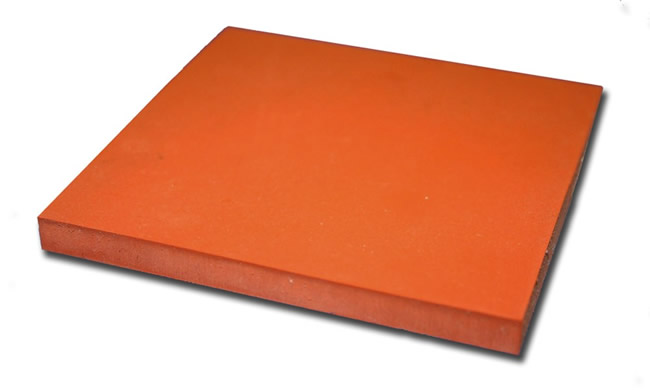
Closed Cell Sponge

Organic cellular sponge rubber for a variety of general purpose applications without stringent environmental, sealing, or temperature requirements

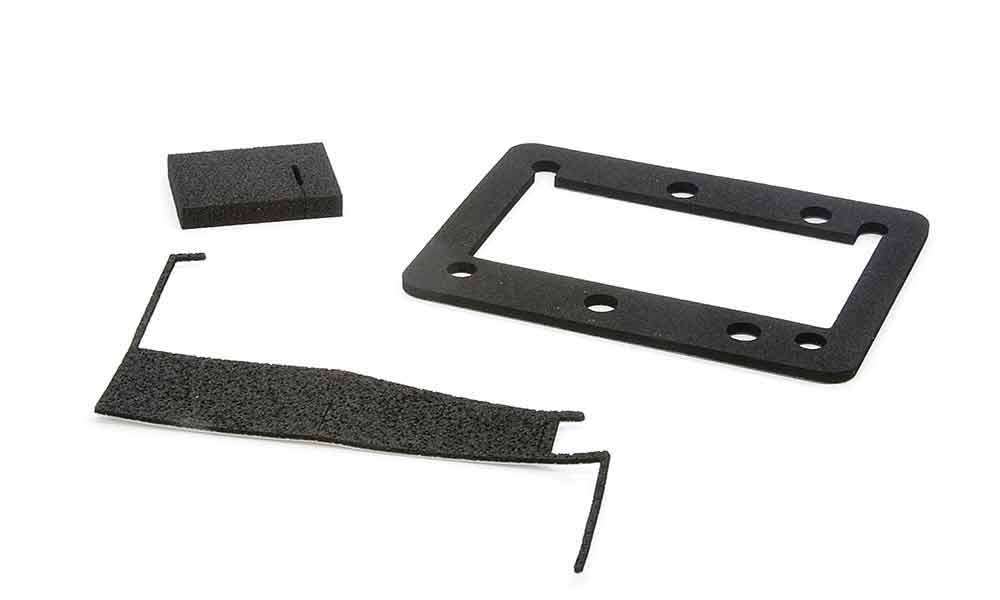
Neoprene gaskets

The technically correct term for closed cell sponge rubber is expanded rubber. The cells are like individual balloons, holding gas and not allowing moisture to pass through as long as the cell wall has not burst. The raw compound is mixed on the same type of equipment used to mix solid rubber compounds, but a chemical blowing agent is also added. Under the heat and pressure of a pre-cure or pre-forming process, this additive decomposes and mixes with the rubber compound and generates nitrogen gas. As this reaction is occurring, the mixed batch is placed into an oven and allowed to expand into a bun from 2″ to 4″ thick. The bun of closed cell sponge rubber is then aged and split into sheets typically from .062″ thick and greater.

Constant deflection of closed cell sponge rubber may cause the gas to permeate through the cell walls. Over compression of the closed cell sponge such as beyond 50 – 70% deflection, may cause the cells to burst. When a closed cell sponge gasket has been over compressed, the gasket may rebound very slowly, or not at all, compromising the integrity of the gasket. Most closed cell sponge gaskets should be deflected 20 – 35% for optimal sealing performance. These properties are discussed in ASTM D1056, ASTM D6576 and Mil-R-6130C.

Although Stockwell Elastomerics’ closed cell sponge rubber business frequently involves silicone sponge rubber, there are many situations where non-silicone closed cell sponge rubber is more appropriate. The following is a rundown of the closed cell sponge / expanded rubber gasket materials most frequently used by Stockwell Elastomerics in service to customers. Visit the Closed Cell Rubber / Neoprene Data Sheets page for detailed technical information on these expanded rubber materials.


Closed Cell Neoprene Sponge Rubber

Produced from 100% neoprene polymer, most closed cell neoprene sponge products meet UL 94HF-1 flame rating. They are generally serviceable from -40°F to 158°F continuous and withstand 200°F intermittently. Premium closed cell neoprene sponge products will resist light oil contact, ozone, alkalis and acids, making them a good choice for general enclosure door gaskets.


Closed Cell Blended Sponge Rubber

Produced from a blend of neoprene, EPDM and SBR, these grades are the most frequently supplied for general purpose sponge gaskets. If a commercial closed cell neoprene sponge gasket is requested, this would likely be supplied. These products also normally meet UL 94HF-1 and will take -70°F without cracking due to cold embrittlement. The oil resistance will not be as good as on the 100% neoprene sponge products.


Closed Cell EPDM Sponge Rubber

Closed cell EPDM sponge materials will not meet the UL flame rating without additives and they will not withstand oils or fuels. However, they will stand up to outdoor conditions such as water, ozone and indirect sunlight better than neoprene.


Closed Cell Epichlorohydrin (ECH) Sponge Rubber

These closed cell ECH sponge materials are often specified for under-the-hood automotive gasket applications due to their ability to handle continuous temperatures of 300°F and some light oil and fuel contact. ECH also has very good resistance to weather, ozone, sunlight and oxidation.


Ensolite Vinyl Nitrile / Neoprene

These blends of closed cell sponge are versatile, having a temperature range of -40°F to 180°F, and availability in 50 foot continuous rolls for gasketing. Certain Ensolite products have flame ratings of UL 94V-0 and UL 94HF-1 depending on thickness. They tend to have slightly lower density than most closed cell sponge products, and the water absorption properties are slightly higher than closed cell neoprenes.

Frequently Asked Questions about Closed Cell Sponge

What is closed cell sponge and how does it differ from open cell sponge?

Closed cell sponge contains individual cells that do not allow air or water to pass through them. It resists water absorption and forms a reliable barrier when compressed. Open cell sponge has interconnected cells that allow air and water to pass freely. It absorbs water and is not recommended for outdoor or wet environments.

How does closed cell sponge achieve environmental sealing?

The sealed cells in closed cell sponge resist the ingress of water, but this material also provides a compression-based barrier. When compressed by 20% to 30%, closed cell sponge can form a reliable seal against rain, dust, contaminants, and water spray. This makes it suitable for IP-rated enclosures, especially when combined with proper flange design.

What materials are used to make closed cell sponge?

Closed cell sponge is made from silicone, neoprene, EPDM, SBR, ECH, or a blend of materials. Stockwell Elastomerics specializes in closed cell silicone sponge because it offers the best combination of temperature resistance, ultraviolet (UV) stability, compression‑set performance, and environmental sealing.

Which standards govern closed cell silicone sponge?

Closed cell silicone sponge is typically classified under ASTM D1056 (cellular rubber) and ASTM D6576, which defines closed cell silicone sponge grades, density classes, compression‑deflection ranges, and water absorption limits. These standards ensure predictable sealing performance and material consistency.

What types of closed cell silicone sponge does Stockwell Elastomerics offer?

Stockwell Elastomerics offer closed cell silicone sponge in these densities.

  • Low Density (Class 1): Softer and easier to compress
  • Medium Density (Class 2): The most common choice for enclosures and outdoor sealing
  • High Density (Class 3): Firmer for higher sealing force or structural support

Within each density-based class, Stockwell Elastomerics offers soft (A), medium (B), and firm (C) firmness levels.

How does closed cell silicone sponge perform in outdoor environments?

Closed cell silicone sponge is one of the best outdoor sealing materials available. It offers excellent resistance to sunlight and ozone, minimal water absorption, wide temperature stability, and long-term stability in rain and across freeze-thaw cycles. Together, these characteristics make it ideal outdoor enclosure gaskets, HVAC equipment, and transportation applications.

What is the temperature range of closed cell silicone sponge?

Depending on the grade, closed cell silicone sponge typically withstands temperatures ranging from –80°F to +400°F (–62°C to +204°C). This range is significantly broader than neoprene, EPDM, or urethane-based sponges. It’s also why engineers choose closed cell silicone sponge for high-temperature environments such as mechanical rooms.

How does closed cell silicone sponge compare to silicone foam?

Closed cell silicone sponge provides better water sealing and a more robust environmental barrier. It also withstands higher compressive force. Silicone foam provides better cushioning, however, and it’s more conformable. In general, closed cell silicone sponge is used for environmental sealing where there is a risk of edge tears or consistent water exposure. Silicone foam is used for sealing in applications with low closure force, or in cushioning applications.

How does closed cell silicone sponge perform under long-term compression?

Closed cell silicone sponge has good compression-set resistance and maintains its sealing force over time, even in outdoor or high-temperature environments. However, because its cells are sealed, excessive compression can cause cell rupture. That’s why engineers typically design for 20% to 30% compression in long-term sealing applications.

Are there other gasket design considerations when using closed cell silicone sponge?

Yes. In addition to compression range and environmental exposure, engineers need to consider flange stiffness, fastener spacing, and gasket width. Flanges must be stiff enough to maintain uniform compression, and fasteners must be adequately spaced to avoid uneven compression. Wider gaskets are better at distributing loads and help improve sealing performance.

Contact Stockwell Elastomerics for Closed Cell Sponge Rubber

Contact Us for further assistance with closed cell sponge rubber / expanded rubber materials including closed cell neoprene, closed cell blended, closed cell EPDM, closed cell epichlorohydrin sponge rubber and Ensolite vinyl nitrile / neoprene.
Contact Stockwell Elastomerics

Request a quote or get more information.