Contact Stockwell Elastomerics
Request a quote or get more information.

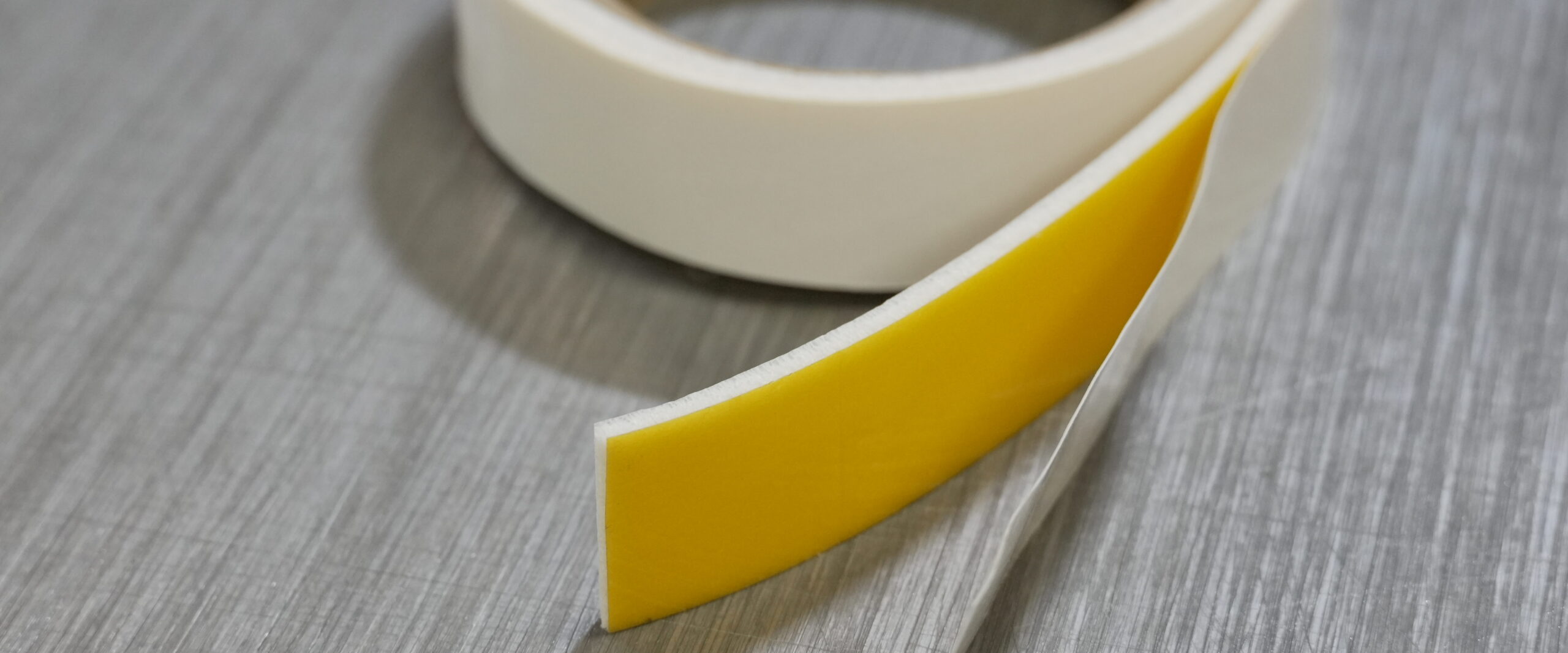
Stockwell Elastomerics fabricates custom gaskets and pads and can apply pressure-sensitive adhesive (PSA) backings that help speed installation. Adhesive lamination is also used to build material thickness or create custom products with specific mechanical or electrical properties. Stockwell Elastomerics is a 3M Preferred Converter with a wide selection of adhesives that use two main chemistries: silicone and acrylic. Each chemistry and structure has its advantages and performance attributes .
Overview of Silicone and Acrylic PSAs
Silicone adhesives offer excellent flexibility, thermal stability, and environmental resistance. They’re used in applications where wide temperature ranges or outdoor exposure is expected, with substrates that experience movement or vibration, and with a variety of silicone materials (solid, foam, and sponge as examples). Acrylic adhesives generally provide stronger, more rigid, and more durable bonds. Typically, these acrylic adhesive backings are used in load-bearing applications and with metal, plastic, or composite substrates.
The table below compares silicone adhesives vs. acrylic adhesives in terms of several key properties.
| Property | Silicone Adhesives | Acrylic Adhesives |
|---|---|---|
| Adhesion Strength | Moderate | Excellent |
| Flexibility | Excellent | Moderate |
| Temperature Range | Broader | Narrower |
| UV/Weather Resistance | Excellent | Moderate |
| Cost | Higher | Lower |
Perhaps a note here: Stockwell Elastomerics’ Applications Engineers can help selection of specific adhesive best for your application
The sections that follow provide additional details.
Adhesion Performance
Silicone adhesives can bond to glass, ceramics, metals, and many plastics; however, their adhesion strength is generally lower than acrylics. In part, that’s because silicone’s low surface energy (LSE) can limit adhesion unless more rigorous surface preparation is performed. Acrylic adhesives provide significantly higher adhesion strength and maintain their tack and peel strength over time. Yet silicone’s elastomeric nature allows it maintain bond integrity while withstanding flexing.
Temperature Resistance
Silicone adhesives have a wider range of operating temperatures and remain functional from -80°F to 450°F (-62° to 232°C). Most of the 3M acrylic PSAs that Stockwell Elastomerics selects and applies have a low temperature rating of -40°F (-40°C). Some can withstand high temperatures up to 300°F (148°C) and intermittent exposure up to 350°F (176°C). One 3M high-temperature acrylic adhesive can tolerate short-term exposures up to 500°F (260°C).
Environmental and Chemical Resistance
Silicone adhesives provide excellent resistance to sunlight (i.e., UV radiation), ozone, moisture, humidity, and thermal cycling. However, they have limited resistance to fuels, oils, and solvents. Acrylic adhesives resist water, oxidation, aging, and many chemicals. They outperform silicone adhesives in terms of fuel, oil, and solvent resistance but are more susceptible to UV degradation and may turn yellow or become brittle over time.
Mechanical Properties
Silicone adhesives are soft, flexible, and have a low modulus. They absorb vibrations and can accommodate movement. In addition, their flexibility prevents stress concentrations that could cause brittle adhesives to fail. Acrylic adhesives are stronger, stiffer, and have a higher modulus than silicone adhesives. With their high tensile strength and shear resistance, acrylics are often used in structural bonding and industrial assembly.
Cost and Additional Applications
Silicone adhesives are typically more expensive because of their extreme temperature resistance and environmental durability. Applications include outdoor LED lighting and telecom enclosures. Both require resistance to high heat and long-term weather protection. Acrylic pressure sentivie adhesives are used to with robotics and factory automation for high-strength bonding with minimal surface preparation.
Ask Stockwell Elastomerics for Custom Gaskets with Adhesive Backings
Stockwell Elastomerics uses a variety of cutting and molding processes to create custom gaskets, pads, and other industrial rubber products, especially ones made from silicone elastomers. Adhesive lamination complements custom gasket fabrication and can use various types of silicone or Acrylic adhesives. Contact Stockwell Elastomerics via service@stockwell.com or 215-335-3005 for expert gasket fabrication and assistance with adhesive selection.